The Impact of Trusted Data on Digital Asset Ecosystems
Tokenisation changes how assets move. But building digital asset ecosystems that can operate at institutional scale takes more than putting instruments on-chain.
The question is no longer whether a financial product can be tokenised. Increasingly, it is whether the information behind that tokenised instrument is structured, trusted and workflow-ready enough to support the market activity around it.
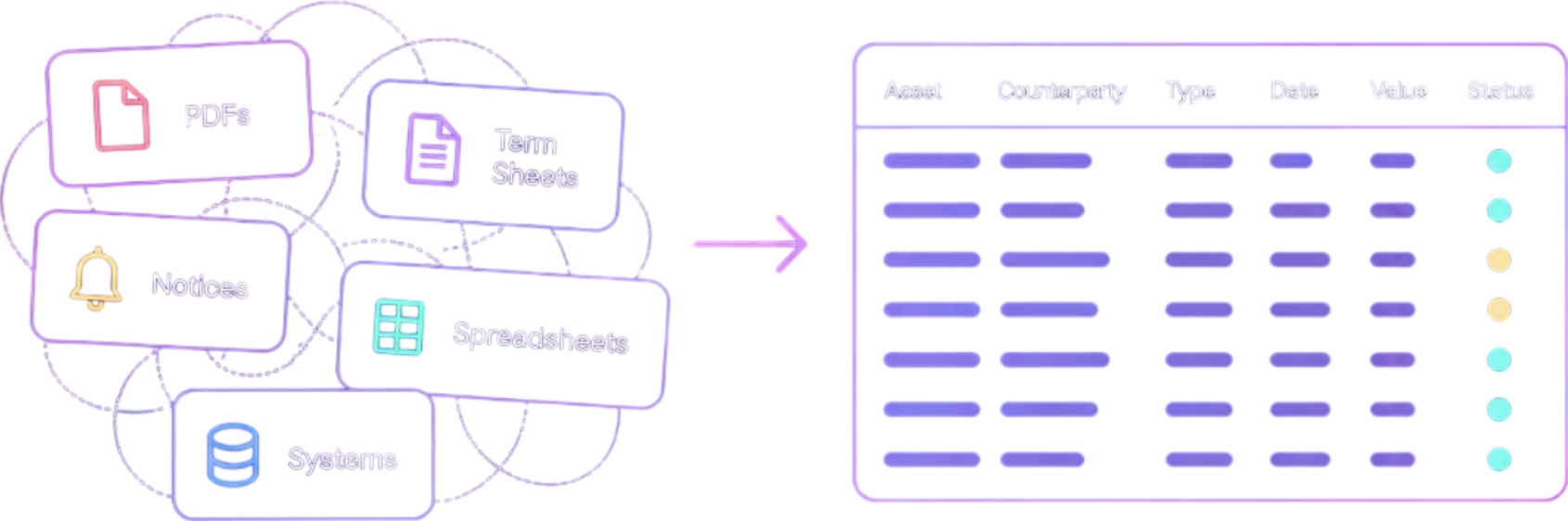
Across financial markets, institutions already hold enormous volumes of data. The challenge is that much of it remains fragmented across documents, systems, messages, reports and operational workflows. Before that information can support digital infrastructure, it needs to be extracted, validated, structured and connected.
Without that layer, tokenisation risks digitising the visible form of the asset while leaving the underlying operating model largely unchanged.
Trusted data is an infrastructure question
For tokenised instruments to work at scale, institutions need confidence in the data behind every token.
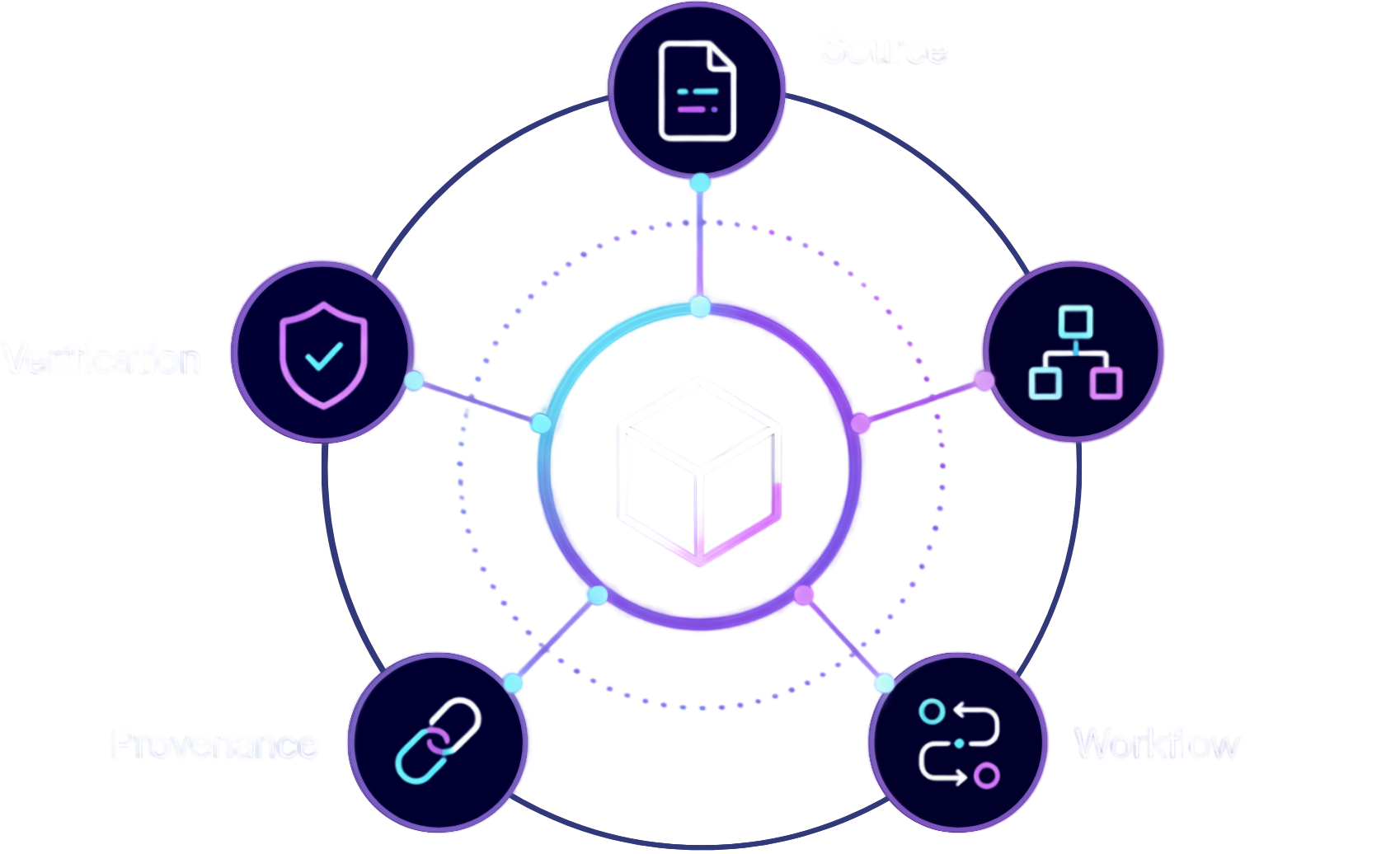
That means more than simply having information available. Market participants need to understand where the information came from, how it was structured, who validated it and how it moves downstream. This is where provenance becomes critical.
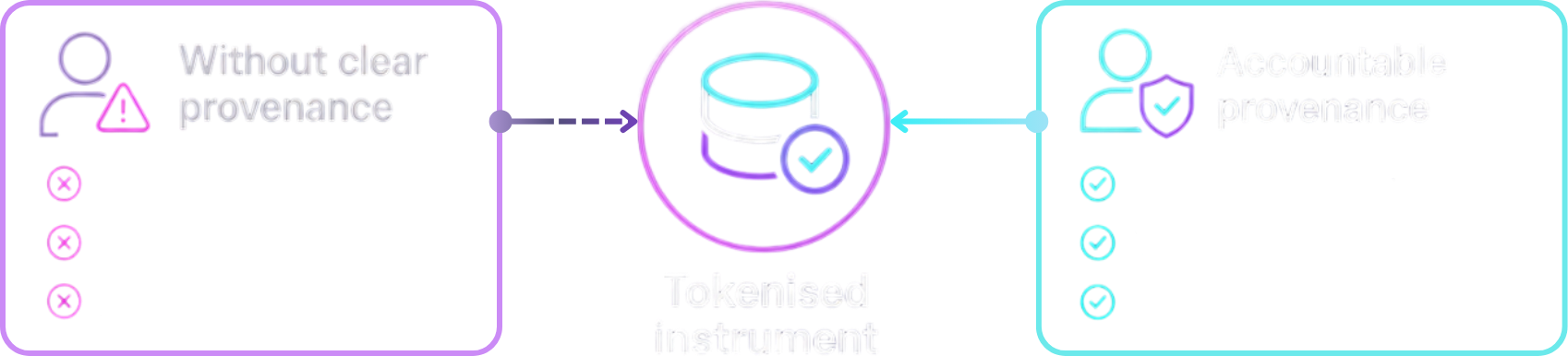
When data is used to create, service and move a tokenised instrument, it carries accountability. If the underlying information is unclear, inconsistently controlled or poorly validated, the risk does not disappear simply because the instrument is digital.
In many cases, it can move faster across systems, networks and participants.
Provenance matters because accountability matters
As digital asset ecosystems mature, provenance will become one of the core questions institutions ask of their infrastructure providers.
- Who prepared the data behind the instrument?
- How was it checked?
- Can the source be traced?
- Is there a clear review process?
- Does the operator have the regulatory standing to support that role?
These questions matter because structuring the data behind a tokenised instrument is not neutral operational work. It shapes how the instrument is represented, distributed, serviced and trusted across market workflows.
For institutional adoption, this work needs to sit within an accountable framework, supported by source traceability, validation controls and licensed, regulated operators.
Bad data becomes a bigger risk when it moves faster
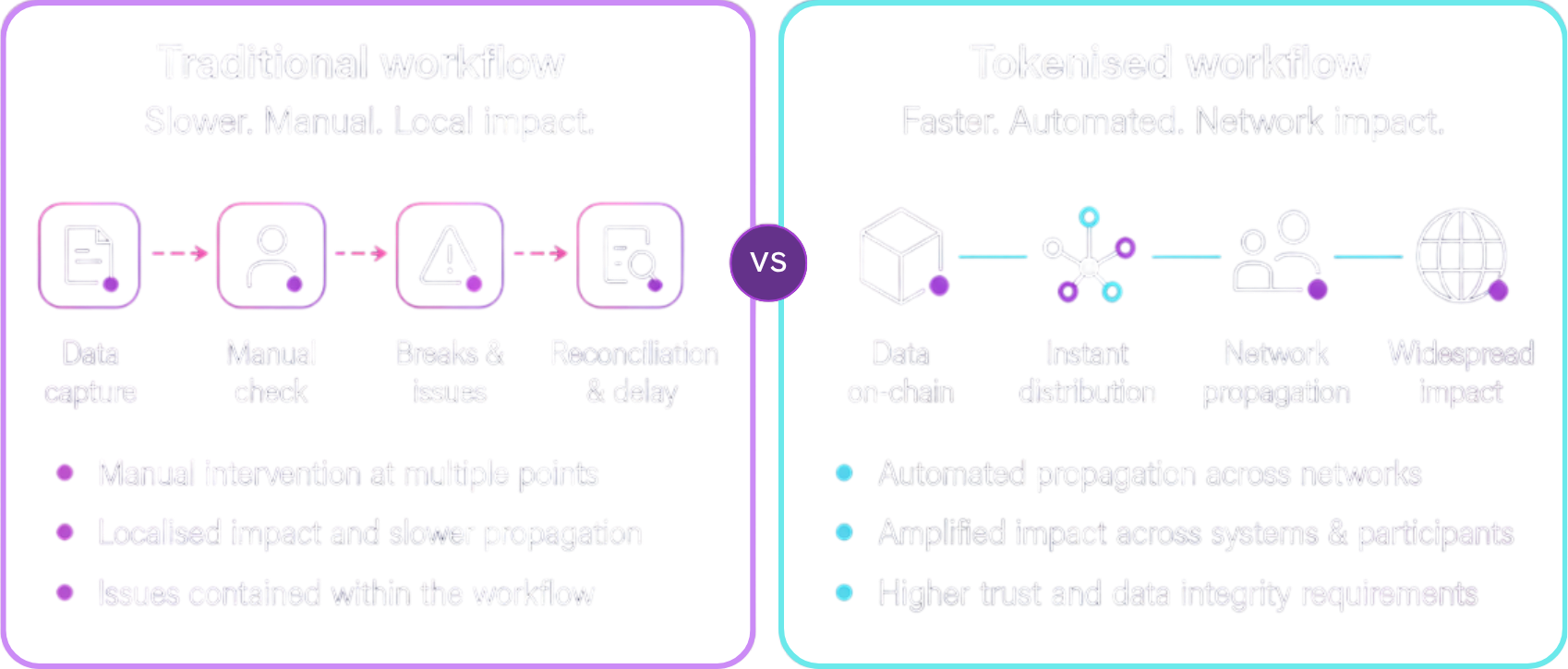
In traditional workflows, poor data often shows up as manual breaks, reconciliation issues and operational delays.
In digital asset ecosystems, the same problems can scale more quickly because information is designed to move faster, across more connected infrastructure.
That is the shift institutions need to pay attention to.
When data moves slowly, errors are often contained within manual processes. When data moves across digital networks, the impact of those errors can be amplified across systems, counterparties and market participants.
Trusted data should therefore not be treated as a supporting feature. It is part of the market infrastructure itself.
The data layer cuts across asset classes and workflows
This challenge is not limited to one asset class.
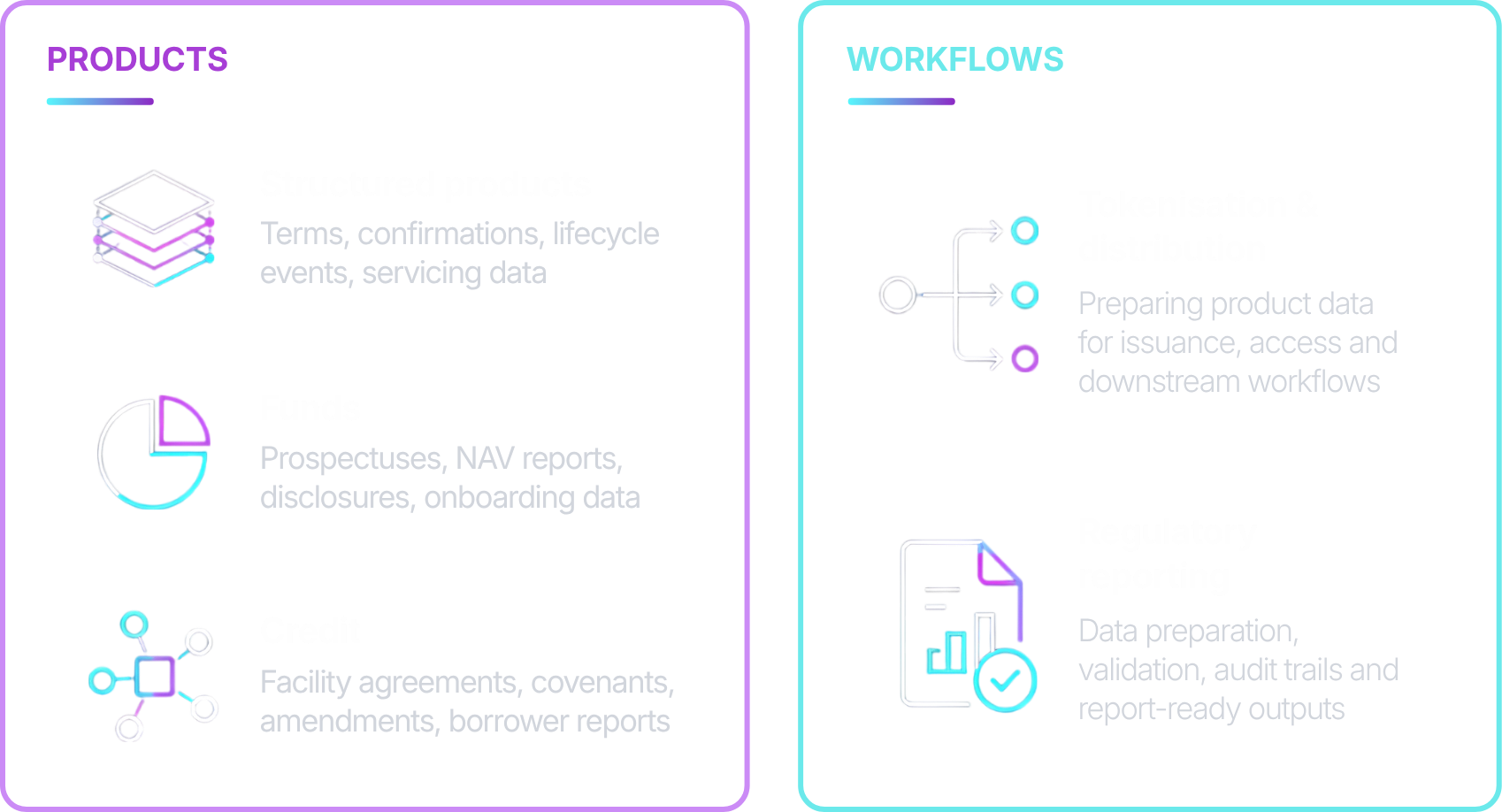
In structured products, it can involve terms, confirmations, lifecycle events and servicing data. In funds, it can involve prospectuses, NAV reports, disclosures and onboarding data. In credit, it can involve facility agreements, covenants, amendments and borrower reports.
It also extends beyond asset classes into the workflows around them, from tokenisation and distribution to regulatory reporting, data preparation, validation, audit trails and report-ready outputs.
The common thread is not simply more data. It is better structured, better governed and more usable information that can move across real institutional workflows.
What a connected workflow could look like
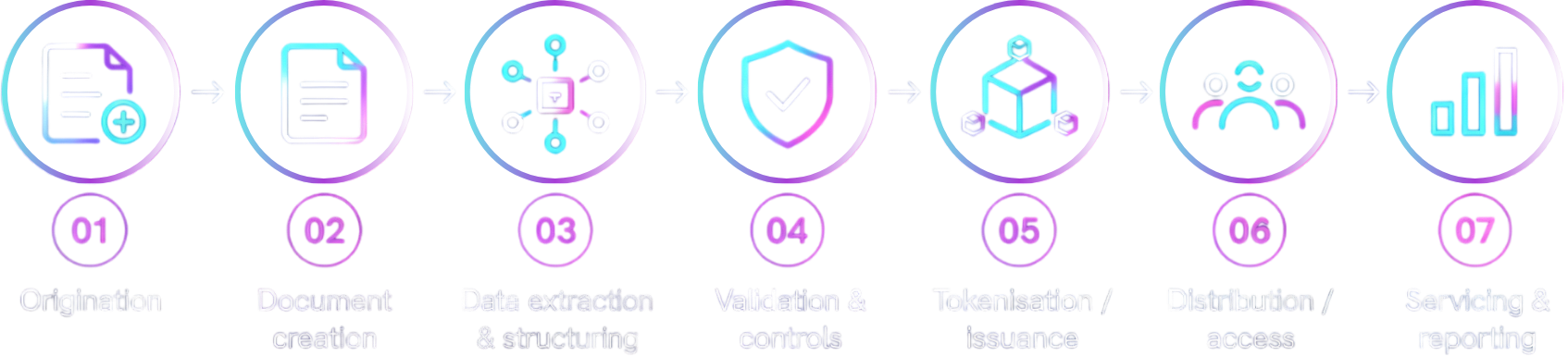
With the right data layer in place, information can move more seamlessly from asset origination through document creation, data extraction, validation, tokenisation, distribution, servicing and reporting.
This is the shift from data as a static record to data as an operational layer.
For institutions, the opportunity is not to collect more information. It is to make the information they already hold work harder across the market lifecycle.
That means turning fragmented information into structured, trusted and workflow-ready data that can support automation, connectivity and scale across assets, workflows, networks and access.
The future of financial markets is not just tokenised
The future of financial markets is structured, trusted and workflow-ready.
As digital asset ecosystems continue to develop, the institutions that scale will not only be those that can issue or distribute tokenised instruments. They will be the ones that can make the information behind those instruments reliable, traceable and usable across the full market lifecycle.
To learn more, speak to the Marketnode team at smartflow@marketnode.com.